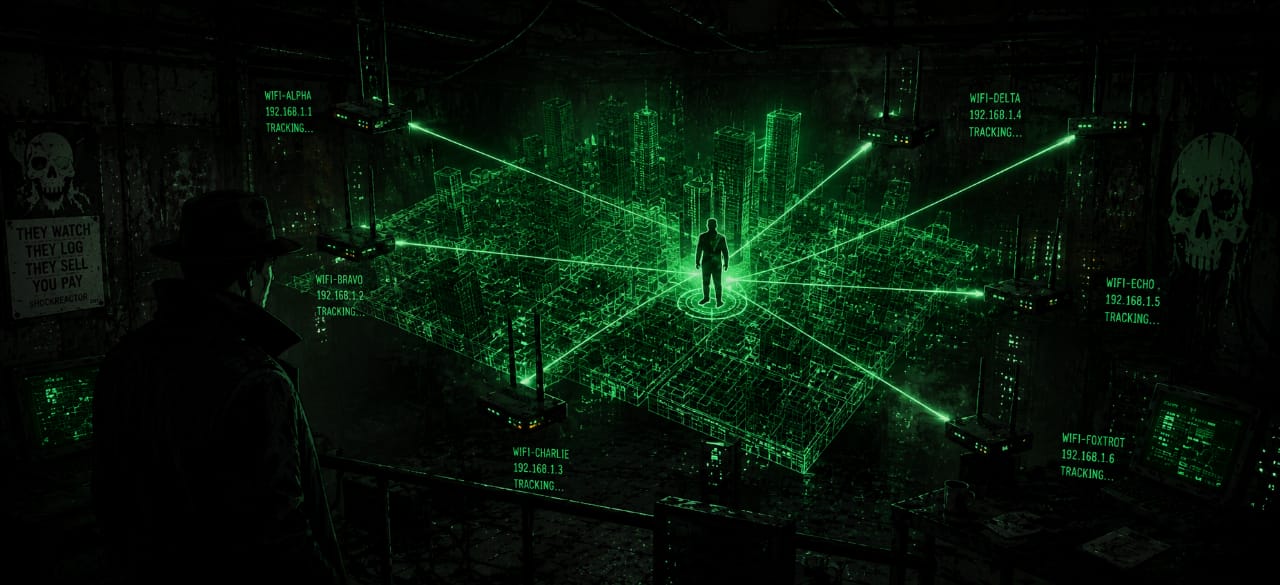
"I turned on a premium VPN, opened a clean incognito window, and didn’t even log into my account—yet the platform still pinned my exact city and served me hyper-local ads." Sound familiar? Over the last few months, tech forums have been flooded with this exact complaint. Users are double-checking their DNS leaks, cycling through fresh server endpoints, and changing protocols, but platforms like YouTube and major data brokers keep looking right through their encryption.
This doesn't mean your VPN handshake was cracked. It means modern tracking telemetry has moved far beyond the primitive method of analyzing IP addresses.
To survive the current era of surveillance capitalism, you need to understand exactly how the network is piercing your perimeter—and how to construct an actual, multi-layered defense.
The Anatomy of Silent Telemetry: BSSID Mapping and LAN Leaks
When you deploy a standard encrypted tunnel, you are only locking down one vector: your network IP. But your browser APIs and operating system maintain dozens of background backdoors that tech giants exploit to gather circumstantial evidence of your real physical location.
BSSID Triangulation (Wi-Fi Proximity): Your smartphone and laptop are constantly scanning the wireless spectrum in the background. They see the network names and unique physical hardware addresses (BSSIDs) of every router around you—your neighbors, the coffee shop downstairs, the smart devices next door. Big Tech platforms maintain a comprehensive, real-time global map of these wireless beacons. The moment a web app requests permission to scan network environment vectors via your browser or OS, it cross-references those neighboring BSSIDs against its database. Your foreign VPN IP is instantly overridden. You are pinned down to the exact room, regardless of your server location.
Device Fingerprinting: The exact combination of your graphics card rendering specs (WebGL), system fonts, OS version, keyboard layout, and audio API behaviors creates a highly specific hardware fingerprint. If your VPN connection ever drops for even a fraction of a second without a hard kill-switch, or if you accidentally browse natively just once, that unique fingerprint is permanently bound to your real-world geography in corporate data lakes.
Hardening Your Architecture Against Advanced Tracking
If you want to reclaim your digital boundaries against heuristic tracking, a commercial app subscription is no longer a definitive solution. True stealth requires managing both your network layer and your device hardware telemetry.
Isolate Your Network Interface: The baseline for real privacy is moving your encryption off the client device and onto the router level. When your router manages the tunnel, your individual devices (phones, laptops) are shielded from making direct encrypted handshakes, and their localized location services can be stripped down systematically.
Spoof Device Sensor Data: For mobile operating systems, mitigating telemetry requires overriding the device’s internal positioning. Advanced privacy setups involve implementing system-level mock location providers (Fake GPS tools). Your hardware must be forced to feed the OS kernel false coordinates that perfectly match the location of your exit node, completely neutralizing wireless triangulation.
Deploy Clean, Independent Infrastructure: Ditch mass-market commercial VPN networks whose IP blocks are publicly documented and indexed by corporate firewalls. True data sovereignty relies on deploying independent, custom nodes using next-gen protocols like VLESS with strict Reality obfuscation.
Privacy isn't a setting you toggle inside an application. It is an aggressive, calculated architecture where you control every byte of data and every single coordinate your hardware attempts to broadcast to the outside world.
#CyberSecurity #DataPrivacy #BSSIDSurveillance #GeoTracking #VLESS #RealityProtocol #Infosec #TrafficStealth #vpn-top-shop