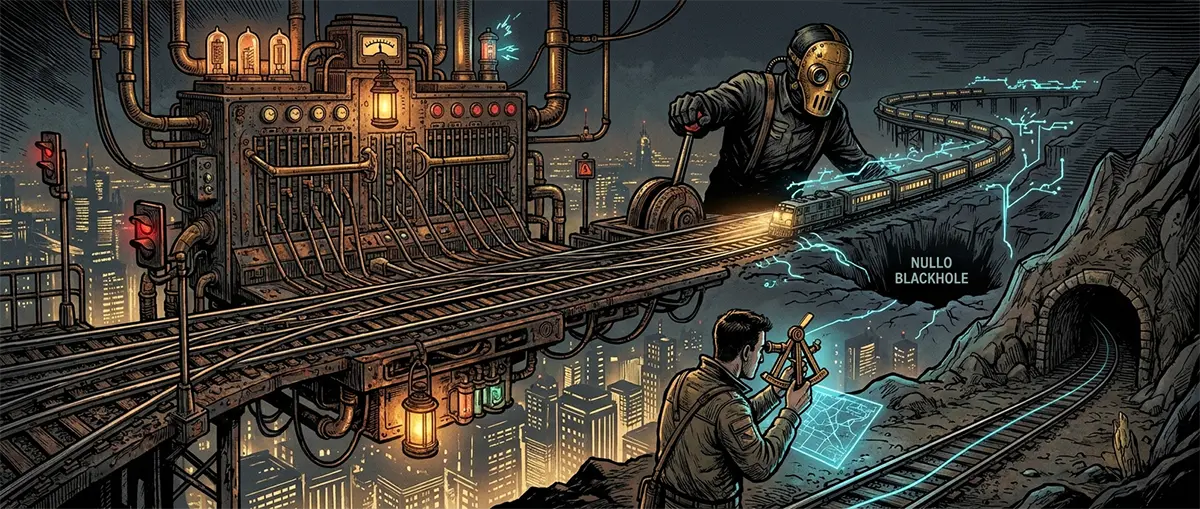
The Architecture of Blind Trust: Where BGP Breaks Down
The BGP protocol was designed at the dawn of the internet in an atmosphere of gentlemanly trust: Autonomous Systems (ASNs) simply trust the routes announced by their neighbors. If one operator says, "I know the shortest path to Hetzner or Cloudflare IP ranges," neighboring routers rebuild their tables without a second thought.
In practice, this opens up vast opportunities for aggressive infrastructure maneuvers:
- Subnet Hijacking. The routing rule states that a packet always travels via the most specific (narrow) route (Longest Prefix Match). If a target service announces a large
/16subnet, and a backbone operator inside the isolated perimeter suddenly issues an announcement for a narrow/24subnet falling within that same range, all traffic obediently wraps around to this forged route. - BGP Blackholing. The intercepted prefix is channeled to a virtual
Null0interface directly on the operator's border router. Packets are not analyzed, filtered, or checked for signatures—they are physically dropped by the network processor's core even before touching the DPI pipelines. - AS-Path Manipulation. Regulatory nodes can artificially lengthen or distort Autonomous System paths (AS Path Prepending), creating routing loops. Packet latency instantly shoots to infinity, the TTL expires along the way, and the session dies on timeout.
Why Classical Tunnels Are Powerless Against Routing Collapse
When routing fails at the autonomous system level, any tricks inside tunnels collapse:
- The Server is Physically Unreachable. You can configure a flawless uTLS browser stack emulation and hide behind a legitimate web server, but the packet with the initial Client Hello will not even reach the country's border. It will die at the very first border gateway where the routing table has been rewritten.
- Paralysis of Peering Interconnects (IX). During isolation drills or local shutdowns, backbone operators simply kill BGP sessions at external traffic exchange points, locking routes exclusively to domestic state-controlled ASNs.
- Bypassing RPKI Validation. The RPKI (Resource Public Key Infrastructure) architecture is designed to cryptographically certify an owner's rights to announce prefixes via ROA records. However, many local providers have either failed to configure strict RPKI Drop Invalid validation or consciously ignore its status in favor of local static policies (Local Preference).
- Multi-Hosting with Heterogeneous ASNs (Anycast & Multi-homed IP). Do not keep your entire infrastructure on a single hosting provider or within a single autonomous system. Deploy nodes in geographically and logically independent ASNs. If one data center's prefix falls under selective blackholing, the client application must automatically switch to a backup entry point on the other side of the world using dynamic DNS-failover protocols.
- Hidden Transit Gateways (L2/L3 GRE/IPIP over Local Networks). Creating intermediate transit nodes within neutral regional operators whose prefixes are not on the lists of potentially hazardous foreign subnets. Traffic first goes to an inconspicuous corporate IP, and only from there is it redirected to the external network via a closed internal transit.
- Anomaly Monitoring via Looking Glass and RIPE Atlas. Do not wait for clients to complain about a "dead" tunnel. Set up monitoring for your server's prefix visibility through public BGP Looking Glass tools. If metrics show a sudden divergence of paths or a spike in drops on border routers, the client configuration must migrate to a backup transport before the route finally collapses.
The Engineering Counter-Strike: Building Routing Resilience
If the regulator operates at the prefix and autonomous system level, you have to respond with a distributed topology:
The fight for privacy has long moved beyond payload encryption. Today, security is defined by a network's ability to preserve the route when the roadmap itself is being rewritten under your feet.